
A human copilot for technology leaders.
AI can write the code. It can't carry the decision, read the room, or hold a team together through scale. That part is still yours. You don't have to do it alone.
I'm Marko Dragoljevic. I've built digital platforms close to the business, launched them for global brands and banks, led a startup's engineering from day zero to a global scale-up, and grown enterprise analytics products with 9-figure revenue at ServiceNow. I work with founders, CTOs and engineering leaders as an advisor, inside the organisation for a few months, or by developing their leaders.

- Close to the businessDigital platforms for entrepreneurs, governments and enterprises, built side by side with the people running them.
- Digital, global footprintPlatforms for world-leading brands, then dozens of digital banking launches worldwide.
- Day 0 to scale-upFrom seed through Series A and B, with product, design and engineering as one team, close to customers.
- Enterprise impactAnalytics products with 9-figure revenue, scaled and re-platformed through hypergrowth.
Seven moments when the job changes.
Your first few teams.
Decisions that took a day now take a week, and you are still in the middle of every one.
Many teams.
Ownership has gone blurry, and the architecture that got you here has started pushing back.
Teams of teams.
You grew into the role as the organisation grew around you. Now it needs designing, not just running.
Your teams and AI.
A few people working faster is the easy part. The real shift is rethinking how your software gets built, tested and shipped, so the whole organisation works better with AI, not just quicker.
Your product and AI.
Customers expect it, competitors are shipping it, and the real question is where it makes your product better, not just newer.
Your scope just grew.
What made you good at the last job won't be enough for this one.
You're investing in a company.
You want an independent read on how healthy its engineering really is.
Often it's two or three at once. That's usually when I get a call.
Building got cheaper. Thinking didn't.
In my own projects, agents write and test much of the code. Getting there took weeks of building what surrounds them: specifications they can follow, tests that check their work, pipelines that catch what they miss. Speed turned out to be the smallest part of what changed.
When building gets cheap, exploring before committing becomes the smart move, and it becomes just as easy to build the wrong thing faster. The hard work moves upstream, to deciding what's worth building and what good looks like, and downstream, to telling a real result from one that only looks good.
That is critical thinking, and it stays human: setting the standards, weighing the trade-offs, knowing when to step in. It's also where most organisations are struggling right now, and where I help.
AI carries more of the work. Critical thinking decides what's worth doing.
Three modes. Sometimes one, sometimes all three.
Executive advisory
Regular one-to-one sessions, with your leadership team, or at board level. Cadence and format follow the problem. Built for the long game.
Embedded leadership
When advice isn't enough and the problem can't wait, I work inside your organisation. Fix what's broken, stabilise what's fragile, accelerate what's ready. When I leave, the machine works and your team is stronger.
Leadership development
One-to-one with CTOs, VPs and engineering leaders growing into a bigger scope, or with a leadership team that needs to grow together. Coaching, workshops, or both.
- 0130 min
A 30-minute call
Where you are, what's in the way, and whether I'm the right person. No pitch.
- 02in writing
A short written proposal
My read of the situation, the mode, cadence, duration, and what success looks like.
- 03fixed rhythm
We start
We review on a fixed rhythm, and we stop when the goal is met.
I still build. It keeps my judgment honest.
eval-harness
Freeze a dataset, fingerprint what a number depended on, and say whether the ordering is real. "The new model is better" is a claim, and claims need evidence.
Orrery
A solar system explorer for the browser. Real orbital mechanics, a curated mission catalogue, in 14 languages. Built end to end, from data pipeline to interface.
Building in the age of AI
Two essay series: Building Products in the Age of AI, on leadership and product thinking, and The Hybrid Engineer, on building software with AI agents. Recent:
The Hybrid Software Development Lifecycle
The Infrastructure That Makes Agents Effective
GenAI-Generated and Curated Evaluation Datasets
On the culture side, a manifesto for engineers who build end to end: devwhateverops.com
Four stages, one thread.
From first platforms to enterprise scale, the constant has been hands-on engineering and leadership, most of it in a trio with product and design.
- Close to the businessPamet, Al-Faris, Comtrade · 2004–2009
Began by writing code for clients across the world, including a stretch of on-site project work in the Middle East. Back home, the role grew into running the whole group, from a handful of engineers to several teams delivering for telcos, startups and large enterprises, with regular trips to the US to onboard customers and help win new work. It was the first time running a group while still designing the systems, and that habit stuck.
- Digital, global footprintBlast Radius, Backbase · 2009–2014
The agency years moved the work from building applications to crafting experiences. Engineers were a small part of teams full of designers and creatives, launching commerce platforms and international campaigns for some of the world's biggest brands, and pushing what was possible in craft and aesthetics.
At Backbase, banking was moving out of the branch and onto every screen its customers owned. Alongside the leadership team of professional services, the practice grew from a small team into a large one, and for many banks it built the first experience their customers could reach from a phone or a browser: dozens of digital banking launches worldwide.
- Day 0 to scale-upEclecticIQ · 2014–2020
Joined at seed and led engineering from day zero, hands-on and as part of the leadership team, helping hold product, design and engineering together as one team. Much of the time went to being on site with early customers, learning what they were really trying to do, so the product was one they could actually use.
Before we could ship an MVP, we had to work out what it should be, with the team and those early customers. Ten months in, it was in their hands. The first major clients followed, and the company grew through Series A and B to global operations and enterprise and government clients worldwide.
- Enterprise impactServiceNow · 2020–2025
Led analytics products with 9-figure revenue through ServiceNow's fastest growth. As the company multiplied its customer base, our products had to scale with it, many times over, without breaking for the thousands of enterprise customers already on them.
At the same time, the platform was reinventing itself. We re-platformed our analytics into a full end-to-end solution, rebuilt the dashboards and brought AI into them, from evaluation to production. It was like rebuilding the gearbox in the middle of Le Mans, in an enterprise where many other teams were working on the same car.
What I'm proudest of is how we grew together. Product, design and engineering ran as one team, and I helped my peers in product management, UX and quality grow their organisations alongside mine. We shared one measure of success: customers using our products more, year after year.
Off the clock.
I'm most at home outside my comfort zone. I dive deep wrecks and photograph the ocean to help protect it. I ride backcountry snow, forest trails and off-road tracks, and once rode a motorbike from Amsterdam to the Sahara, still one of my biggest adventures. Work is the same for me: I go looking for the hard problem, stay with it through the struggle, and find the joy on the other side.
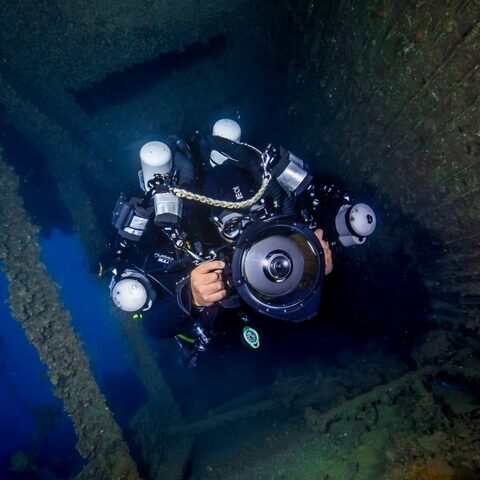
Diving deep wrecksPhoto: Marcin Miętek 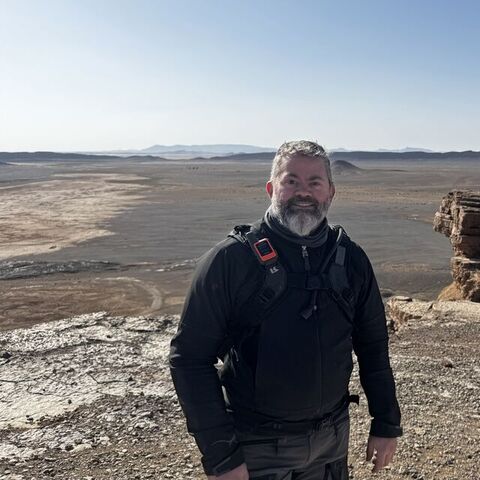
Riding to the Sahara 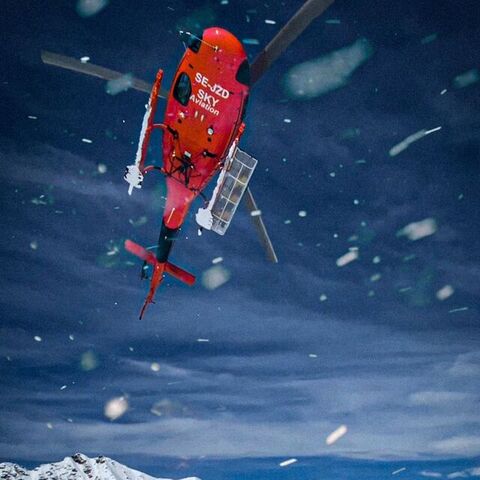
Freeriding where lifts don’t go 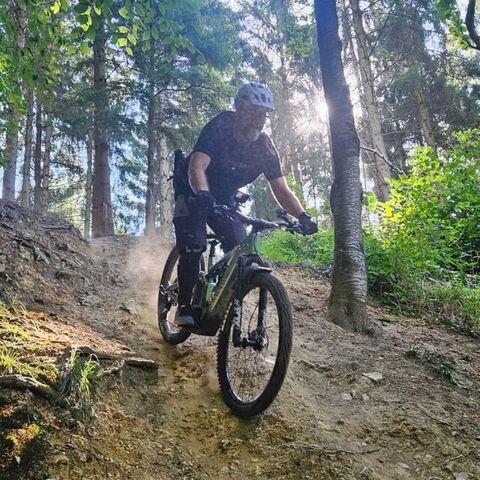
Riding forest trails 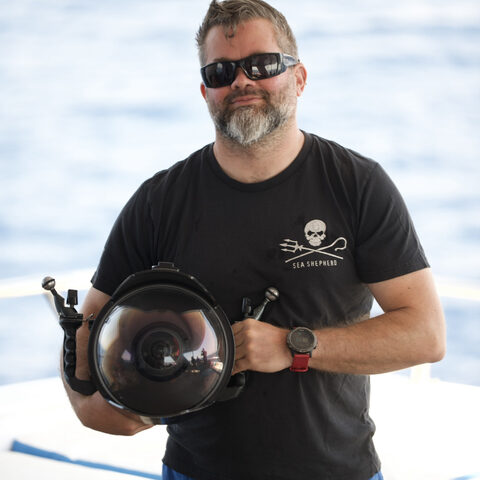
Advocating for the ocean 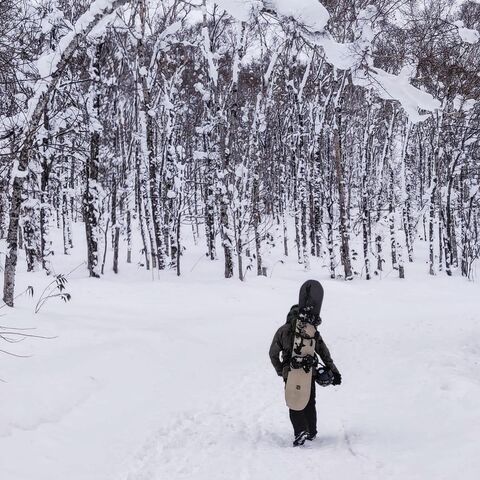
Exploring backcountry around the world 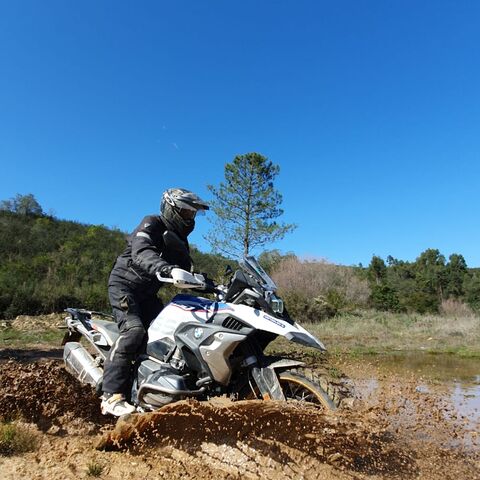
Riding off-road 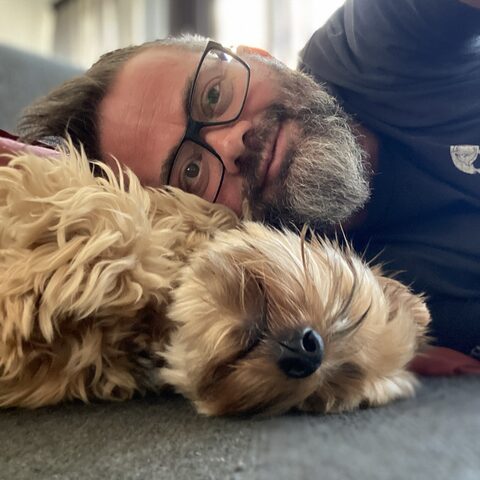
Hanging out with my best friend, Buddy


The best next step is a conversation.
Thirty minutes, no pitch, no proposal: where you are, and whether I can help.
Amsterdam. EMEA. Wherever the work needs to happen.